

By Rachael Pfenninger, director of strategic execution, AMBA
At the beginning of last year, the tariffs that were in place – or were not – were the dominant topic of conversation for many American moldmakers and were driving many of AMBA’s lobbying efforts. The recent change in administration due to the US presidential election had driven market optimism for many industry executives, as they looked forward with hope for reshoring opportunities, slowing inflation and more favorable conditions for small business owners.
Although 12 months have passed since AMBA’s last business forecast, many of the industry’s challenges remain, while other emerging opportunities are being realized. For example, AMBA’s 2025 end-of-year event and recent data point to continuing risks associated with trade policy, as well as persisting cost pressures and workforce challenges. This reflects the larger argument that economists have recently made (Newsweek)1, which is that the American economy at large is softening.
However, as Federal Reserve Chair Jerome Powell stated in 2025, many businesses are following a “low hire, low fire” trend – so while few businesses are hiring, a similar number have held off on firing the employees they have. Tax reform, as identified by Mike Devereux, Wipfli, in AMBA’s recent webinar, also has created meaningful planning opportunities for manufacturers. Additionally, AMBA member companies and industry peers are employing a number of strategies to improve efficiency and profitability.
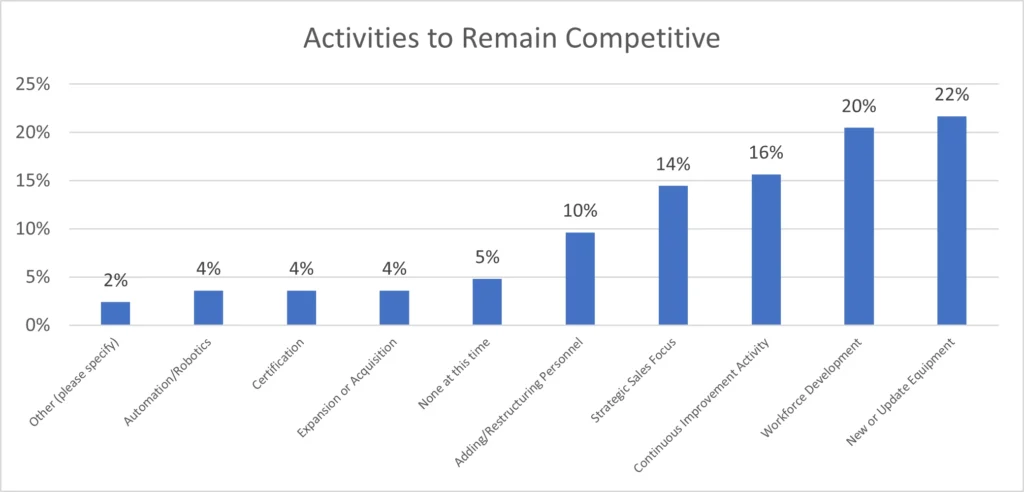
Many of these trends are supported by recent data from the AMBA 2026 Business Forecast Report, which found that over 80 US mold builders (over the course of December 2025 to January 2026) identified a variety of activities they plan on implementing to remain competitive in the coming months. For example, as seen in Figure 1, respondents reported a focus on investing in new or updated equipment, addressing workforce concerns, implementing continuous improvement initiatives and honing their strategic sales efforts.
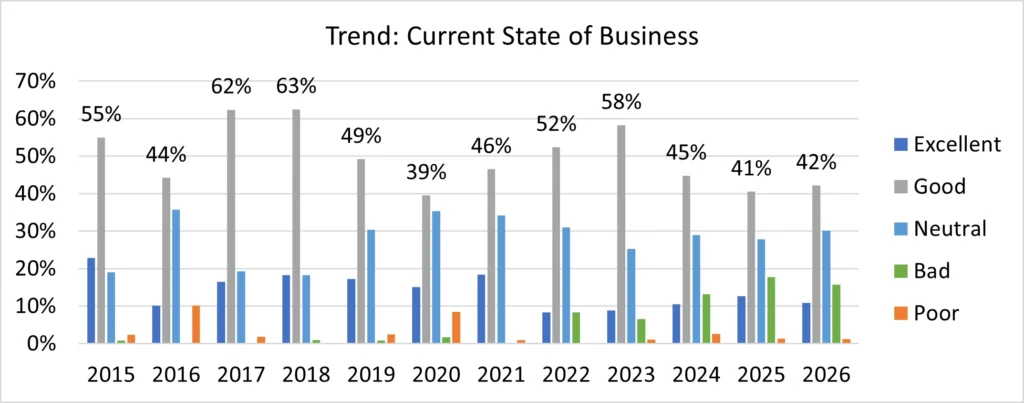
Other data from AMBA’s recent survey also reflects an industry that’s experienced little change over the last 12 months. For example, for 60% of 2026 respondents, employment stayed the same (marking a 10-year high). Similarly, there was very little change in year-over-year data when respondents were asked to report current business conditions. For example, 72% reported that conditions were “Good” or “Neutral” in 2026 – only a 2% fall from data gathered from 2024-2025. (Figure 2 on page 29). Capacity utilization also remained steady year-over-year; in fact, there was no change in either the percentage of respondents who reported current capacity utilization (69%) or anticipated current capacity utilization (74%).
There are mold builders who anticipate profits increasing in the coming months, highlighting either opportunities or the ways in which they’ve mitigated costs. While 23% of respondents feel profits will rise due to falling domestic or international competition – a major challenge for most American mold manufacturers – another 20% identify slowing inflation and/or improved margins as likely factors leading to increased profits. A whopping 33% simply say their profits will rise due to economic confidence, highlighting the faith many executives continue to have in the Administration and its policies.
Economic conditions for US mold builders can change on a dime, depending on factors like legislative policy, trade agreements and more. Stay current on the state of business and dive more deeply into some of the information covered in the 2026 AMBA Business Forecast Report, which – in addition to the information shared here – highlights trends related to quoting, sales, business performance, planned investments, workforce conditions and more.
AMBA’s 2026 Business Forecast Report now is available for purchase ($399 for members; $899 for non-members). This report utilizes data from 33 economic indicator questions to showcase sales trends, profit levels, capital expenditures, shop and design employment levels and challenges, as well as 2025 performance, fourth-quarter performance forecasts and expectations for 2026. Additionally, the 2025 Wage and Salary Report is available for purchase. To view these reports and others, visit the Publications page at www.amba.org.
Sources
- Newsweek, https://www.newsweek.com/map-shows-where-unemployment-is-rising-and-falling-in-the-us-11431300.