

By Rachael Pfenninger, director of strategic execution, AMBA
In AMBA’s 2025 report, Recruitment and Retention Takeaways for US Mold Manufacturers, respondents demonstrated that employees recommend and remain at their companies for several reasons. Employees cited advancement opportunities, work-life balance, reimbursement for training, respect, collaboration, clean facilities and investment in people as core drivers of company and role satisfaction. The report also noted that managers struggle to compete on wages alone, making benefits, culture and a willingness to train increasingly important differentiators in today’s marketplace.
While many AMBA members are struggling with the challenges faced by their industry peers, others are having success with recent workforce efforts. One such member is Hanson International. It has seen its talent investment pay off in workforce expansion and progress towards company-wide goals. Read on to learn more from Julie LaVanway, president at Hanson International.
First, let’s hear a little bit about yourself and your company.
Hanson International, St. Joseph, Michigan, is a family-owned company that specializes in the design, build, sampling and inspection of precision molds, primarily for the die cast and injection molding industries. Founded in 1966 by Merlin Hanson, we have spent nearly six decades building a reputation for delivering world-class tooling solutions to customers around the globe. Today, the company remains committed to the same values that guided our founding: investing in people, maintaining first-class facilities, honoring our commitments and continuously improving our capabilities.
In what ways has your strategic focus impacted or driven Hanson’s investment in talent and employee retention?
Our strategic focus is centered on addressing some of the biggest challenges facing manufacturing today: technological advancements, labor shortages and workforce skill gaps. We understand that overcoming those challenges requires significant investment in people. That’s why we continuously invest not only in equipment and technology, but also in training, apprenticeships and employee development. We view workforce development as a long-term strategy that allows us to remain competitive while creating meaningful career opportunities for our teammates.
Which employee benefit has had the greatest impact on retaining employees, and what feedback have you received from your team about it?
One of the most impactful investments we have made is our commitment to career development through our registered apprenticeship program and ongoing training opportunities. Employees consistently tell us they appreciate having a clear path to grow their skills and advance within the company instead of feeling they need to look elsewhere for opportunities. Knowing the company is willing to invest in their future creates a strong sense of loyalty and engagement.
How has investing in training, education reimbursement and/or career development improved employee engagement and retention?
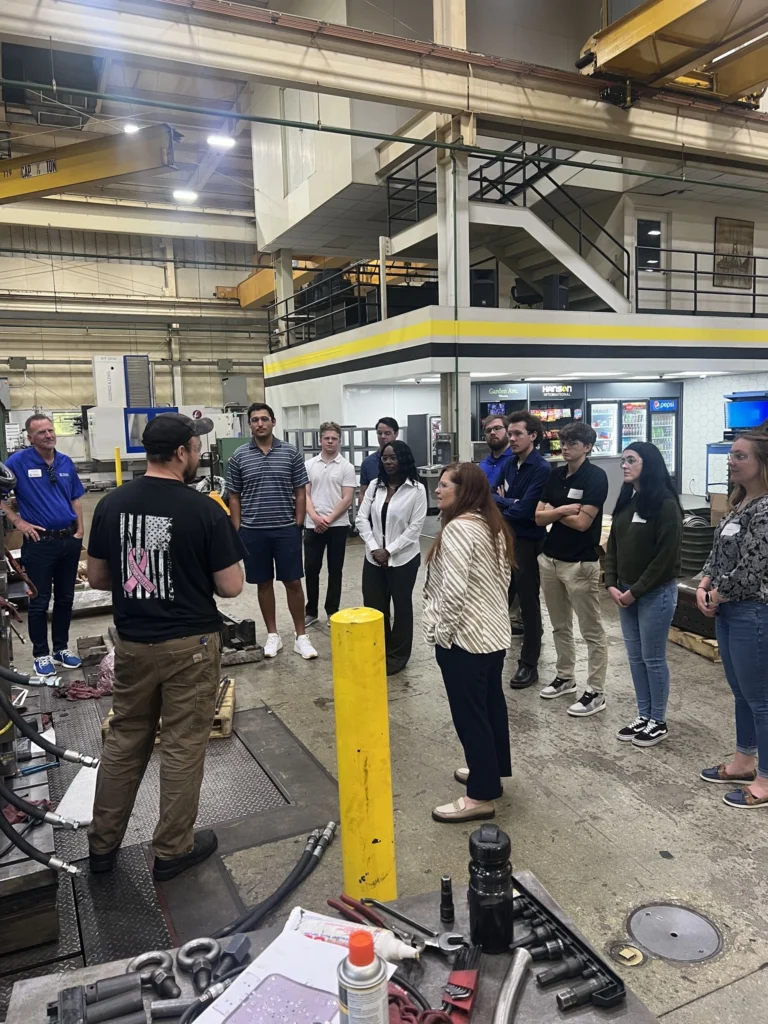
Training and development are essential to our business. Hanson has maintained a US Department of Labor registered apprenticeship program for decades because we recognized early on that developing skilled talent internally would be critical to our future. Apprentices attend classes through Lake Michigan College at the Hanson Technology Center while gaining hands-on experience in our facility. We also provide continuous training throughout the organization on topics such as lean manufacturing, standard work procedures and mistake-proofing.
What role does company culture play in retention, and how do you intentionally build that culture?
Culture is one of our strongest retention tools. We work intentionally to create a workplace where employees feel respected, informed and appreciated. Transparency is a key part of that effort. Employees understand our goals and share in our successes, including monthly raffles when company shipment goals are achieved. We also focus on recognition and engagement through events and activities ranging from pizza lunches and holiday celebrations to retirement parties that celebrate an individual’s contributions. Combined with twice-yearly performance reviews and goal-setting discussions, these efforts help employees feel connected to both the company and their own growth. It’s why we retain our employees year after year.
What retention strategy produced the biggest surprise – something that delivered stronger results than you expected?
One of the most successful strategies has been our focus on creating clear career paths. Through our apprenticeship mapping tools, cross-functional training and regular performance discussions, employees understand where they are today and where they can go in the future. We’ve found that employees are far more likely to stay engaged when they can envision a long-term career rather than just a current job. The positive impact of providing that clarity has exceeded our expectations.
If another mold manufacturer could implement just one change to improve retention tomorrow, where would you recommend starting?
Invest in developing your people. Technology and equipment are important, but the quality of your workforce is what truly differentiates one company from another. Create a structured process to train, mentor and develop employees, while providing them with a clear path for growth. When employees see that a company is committed to their future, they are much more likely to commit their future to that company as well. As we often say at Hanson, the one asset our competitors cannot replicate is the quality of our workforce. n
Learn more about Hanson’s workforce strategies at the upcoming AMBA plant tour workshop at Hanson International, October 22, 2026, St. Joseph, Michigan. For details, registration and hotel information, visit www.amba.org/events.